
The Grand Bazaar which dates back to the mid-C15, is said to be one of the oldest shopping malls in the world. It’s a place to just dive in and wander and, yes, get lost. With over 20 exits/entrances - not sure of the exact number (I saw number 22), there’s always a way out! Where you might actually be once you’re out is another thing, but best bet is to head downhill rather than uphill and if you’re lucky you might see the communications towers on the Asian side of the Bosphorus. See those and you’re OK. Like Rome, Istanbul is built on 7 hills and the Grand Bazaar is located around one of them, close to Constantine’s Column.
The bazaar is a labyrinth of lanes and caravanserais, tiling, vaulted ceilings and confusing corners - and spills well outside the walls of the old bazaar building. We got lost but managed to find a way back in the general direction of our hotel - at least to the water frontfrom where you just hop on a tram - easy!
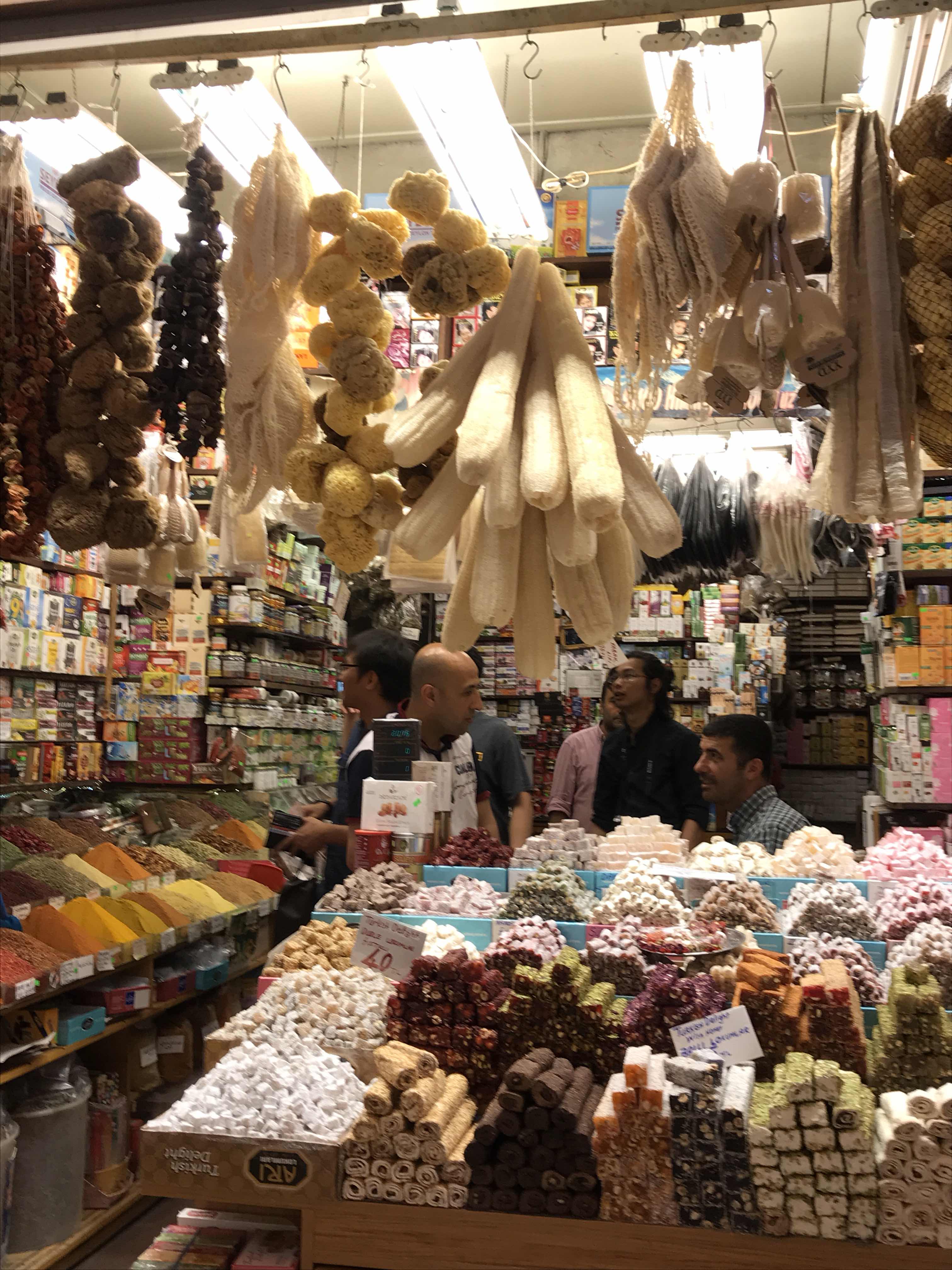
We actually ended up in the Spice Bazaar by sheer happy coincidence. What a place! We visited it 3 times and didn’t see enough. It is fascinating - teeming with people, awash with exotic colours, shapes and aromas. It’s been trading spices since C17 when they say it was the last stop for camel caravans coming from the spice routes of Central Asia and India. Happy days, callooh callay - 5 weeks on the road and we had come full circle!!
We stumbled on other small markets in most of the neighbourhoods we ventured into - at least in the old city, Fatih, the old Constantinople.
And did I say that Istanbul is a city of mosques? Seems like there’s about 3000! But then Istanbul has a population of 8 million (including 3 M refugees) and Islam is the main religion. It is Europe’s most populous city and the world’s third largest. I love the skyline! Towering minarets, grand and the less-imposing alike, fill the evening air with a soft and sometimes not-so-soft but most insistent choral symphony each night and morning.
We arrived during Ramadan and street life was different from what it would normally be. The observants ate and drank nothing during the day - from about 5am until 8pm. And then they were feasting in the streets, in the restaurants and parks well into the night. We were staying near the Blue Mosque and the grounds were crowded every night with lectures, picnicking and fellowship until the wee hour of the morning. How they function during the day is beyond me, but I have great admiration for their dedication.
I think the images speak for themselves so I'll leave you to browse.




No comments:
Post a Comment